

Best Infotainment Systems 2026 | Honda vs Kia vs Ford vs Chevy | Irvine Auto Center
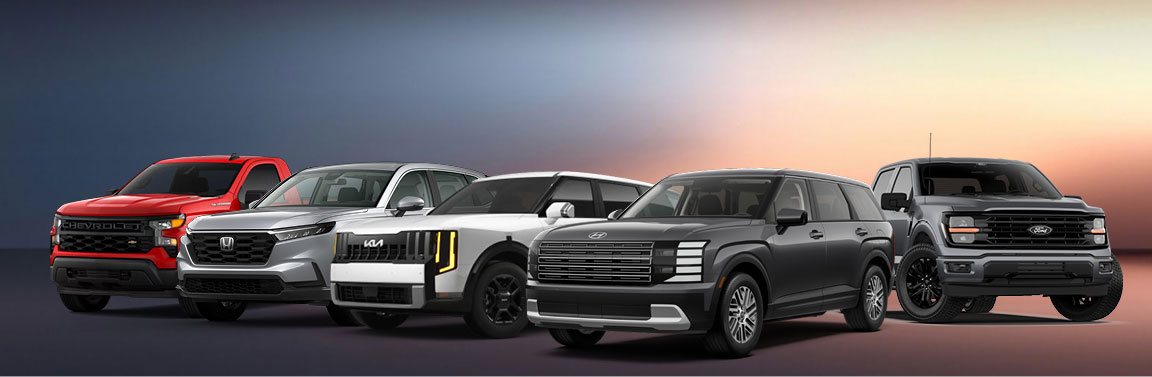
and Chevrolet Compared for Orange County Drivers
You bought the car. Six months later you hate the screen. Maybe it lags. Maybe the voice commands make you repeat yourself three times before responding. Maybe CarPlay drops on the 405 and you are left stabbing at a native GPS that looks like it shipped in 2019.
That experience is common enough that it drives how buyers make their next purchase. And in 2026, the right question is no longer "does it have CarPlay?" Every car in this comparison does. The real question is: what happens when CarPlay is not available - when your signal drops on Laguna Canyon Road, when the connection cuts out on the Ortega Highway, when your battery is dead and the screen is all you have?
At Irvine Auto Center in Irvine, we carry Honda, Kia, Hyundai, Ford, and Chevrolet under one auto group at 30 Auto Center Drive. A side-by-side infotainment comparison is one afternoon of test drives, not a five-dealership research project. This guide tells you what each system does before you get in the car.
- Why OC commuters care more about infotainment than most drivers
- The five criteria that matter on the 405
- Honda: the clean-screen approach
- Kia and Hyundai: the tech-forward option
- Ford SYNC: the one that keeps improving
- Chevrolet: when Google is the native system
- Head-to-head comparison for OC drivers
- Which system fits your Irvine driving life?
- FAQ
Why OC Commuters Care More About Infotainment Than Most Drivers
A 60-minute commute means 60 minutes of interacting with your screen - and some of that commute has no cell signal.
An Irvine-to-downtown-LA commute runs 45-90 minutes depending on where the 405 decides to cooperate. That is a lot of time navigating, taking calls, and managing audio. An infotainment system that requires two taps to change a song is a distraction at highway speed. One that requires three voice repetitions to respond is genuinely worse.
Orange County also has specific dead zones that make native GPS more relevant than it might be elsewhere. The Ortega Highway running between San Juan Capistrano and Lake Elsinore loses signal across multiple stretches. Laguna Canyon Road between Laguna Beach and the 405 has coverage gaps that have been there for years and are not going away. If your navigation runs entirely through a CarPlay session that depends on cell signal, those gaps matter.
Infotainment satisfaction consistently appears among the highest-ranked factors in new vehicle ownership experience across industry research. For OC commuters who spend significant time behind the wheel every day, that tracks. The system you interact with for 90 minutes daily matters far more than the system that impressed you during a 10-minute dealership test drive.
The Five Criteria That Actually Matter on the 405
These five factors determine whether you get frustrated by mile 20 of your commute - not screen size, not spec sheet.
Before comparing brands, here are the actual evaluation criteria used in this guide:
- Wireless CarPlay reliability - does it connect automatically, stay connected, and avoid dropouts during your commute? Wired connection is more stable but adds a cable to manage every day.
- Native GPS quality - what does the map experience look like when your phone signal drops? Does the system have built-in navigation, or does it depend entirely on your phone?
- Voice command accuracy - does "navigate to John Wayne Airport" work the first time, hands-free? Voice commands matter more during I-405 stop-and-go than anywhere else.
- Screen visibility in California sun - afternoon westbound driving on the I-5 or I-405 near John Wayne Airport puts direct Southern California sunlight on horizontal and vertical displays differently. Screen position and anti-glare coating are real variables.
- Physical controls versus all-touchscreen - retained knobs and buttons for volume and climate reduce eyes-off-road time compared to multi-tap touchscreen sequences. A simple, consistent way to reach frequently used controls without looking is an underrated safety feature.
Honda Display Audio: The Clean-Screen Approach
9-inch on the CR-V, 12.3-inch on the Pilot and Passport - all with wireless CarPlay standard across the 2026 lineup.
Honda's infotainment philosophy prioritizes fewer menus, faster access to common functions, and a physical layout that does not require eyes-off-road time to navigate. The result is a system most owners understand intuitively within the first week.
For 2026, wireless Apple CarPlay(r) and Android Auto are standard across every Honda in the lineup - no USB cable required. The CR-V receives a screen upgrade to 9 inches across all trims. The Pilot carries a 12.3-inch touchscreen. The Passport also uses a 12.3-inch display. The Accord LX and SE use a 9-inch screen; the Sport Hybrid and above step up to 12.3 inches.
Google Built-In - the native integration of Google Maps, Google Assistant, and Google Play - is available on select Honda models at upper trims, including the Pilot, Passport, CR-V Sport Touring Hybrid, and Accord Touring Hybrid. On those equipped trims, Google Maps runs without requiring a phone connection. On lower trims without Google Built-In, navigation defaults to your phone through CarPlay.
Physical controls for volume and climate are retained across the Honda lineup - a usability advantage when Southern California afternoon glare makes touching the screen without looking genuinely difficult.
The honest limitation: Honda's native GPS experience on lower and mid trims is phone-dependent. When wireless CarPlay drops on the Ortega Highway, the native backup is more basic than what Chevrolet or the Kia/Hyundai alternatives offer. For drivers who frequently travel signal-challenged routes, that trade-off is worth knowing before purchase.
Explore available Honda Pilot configurations to compare trim levels with and without Google Built-In.

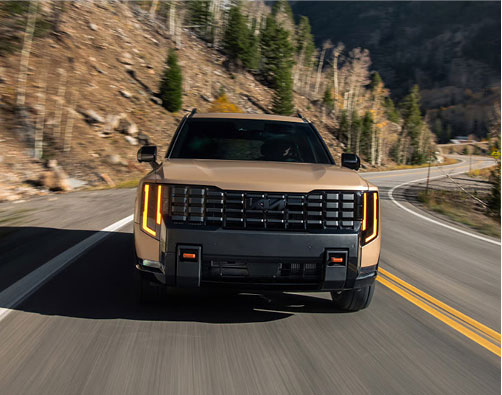
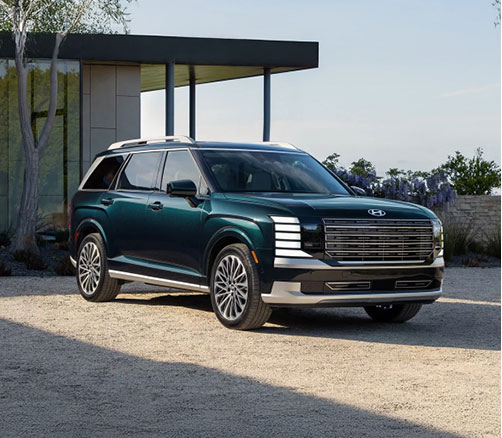
Kia and Hyundai: The Tech-Forward Choice
12.3-inch screens are standard across Palisade and Telluride - but the two systems are not identical in 2026.
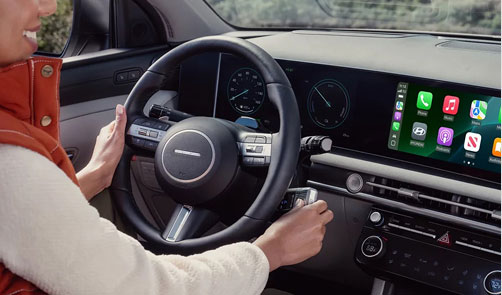
Kia and Hyundai share the same Hyundai Motor Group platform, meaning their infotainment systems are closely related. Both the Palisade and the Telluride carry 12.3-inch center touchscreens, with upper trims adding a second 12.3-inch digital driver cluster for a panoramic dual-screen experience.
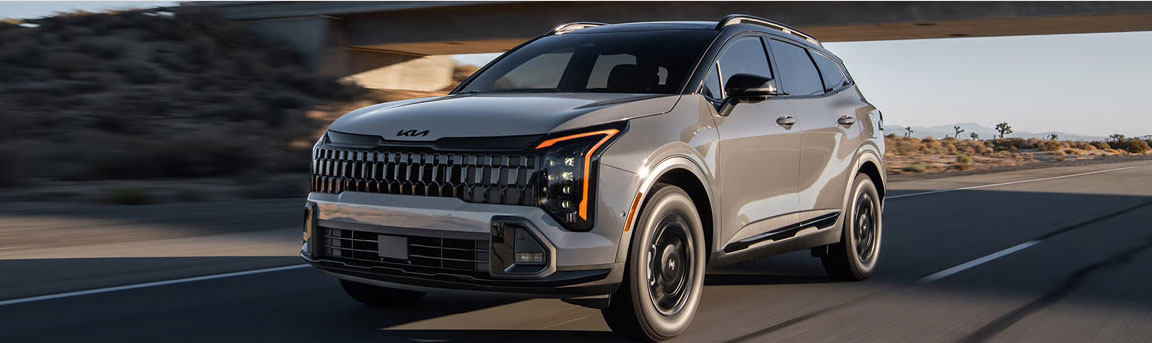
One important 2026 distinction: the Hyundai Palisade received a full generational redesign for 2026 and runs on the newer ccNC (Connected Car Navigation Cockpit) platform. That system brings wireless Apple CarPlay and Android Auto as standard on all Palisade trims, along with over-the-air (OTA) software updates and built-in navigation with offline map caching for signal-dead areas. It is the most current version of the Hyundai Motor Group infotainment experience.
The 2026 Kia Telluride uses the outgoing platform, which means CarPlay remains wired only on current models. Wireless CarPlay arrives with the next-generation Telluride redesign. For buyers who specifically want wireless connectivity within the Kia/Hyundai lineup in 2026, the Palisade is the vehicle that delivers it.
Both models include native turn-by-turn navigation with real-time traffic. The built-in map caching means the system continues functioning without cell signal - not as feature-rich as Google Maps, but more reliable than a phone-dependent CarPlay session that freezes when coverage drops.
The Kia/Hyundai lineup offers the most feature depth of any system in this comparison at upper trim levels. That depth comes with a learning curve. New owners typically settle into the menu structure over a few weeks. After that, the customization depth and digital cockpit integration are genuinely useful for OC commuting.
Browse available Hyundai Palisade options to confirm which 2026 trims include the wireless CarPlay and ccNC upgrade.
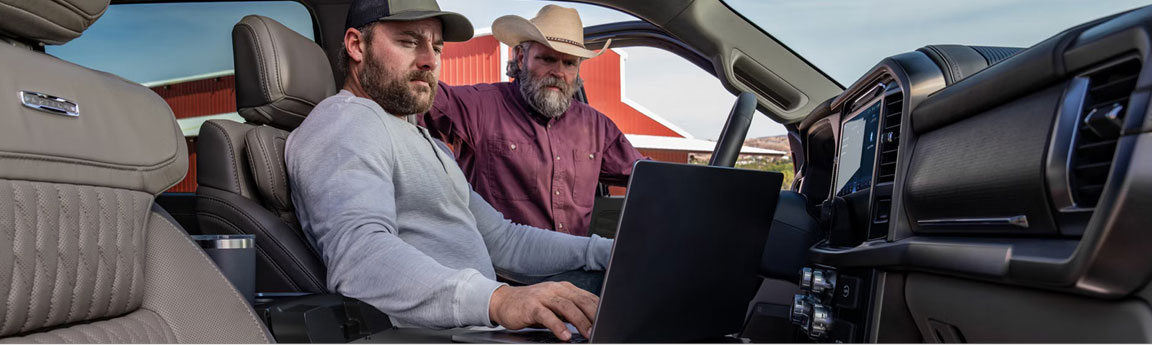
Ford SYNC 4 and SYNC 4A: The System That Has Earned Its Upgrade
The Bronco and F-150 run genuinely different system sizes and layouts - both with strong conversational voice integration.
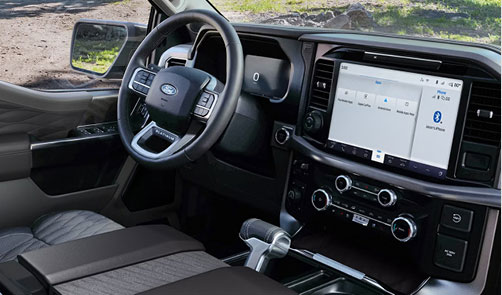
Ford's infotainment story in 2026 runs across two closely related systems. SYNC(r) 4 is standard on the Bronco, with a 12-inch horizontal touchscreen and wireless CarPlay standard. SYNC(r) 4A appears in the F-150 at higher trims, stepping up to a 12-inch or 15.5-inch vertical portrait display with Adaptive Dash Cards that automatically surface frequently used features at the top of the screen. Both support over-the-air updates delivered via Wi-Fi - no dealer visit required.
The 15.5-inch vertical display on the F-150 upper trims is genuinely different from the competition. The portrait orientation keeps navigation and vehicle data readable at a glance. For an I-405 commuter spending an hour daily behind the wheel, that ergonomic layout reduces the number of times eyes move away from the road.
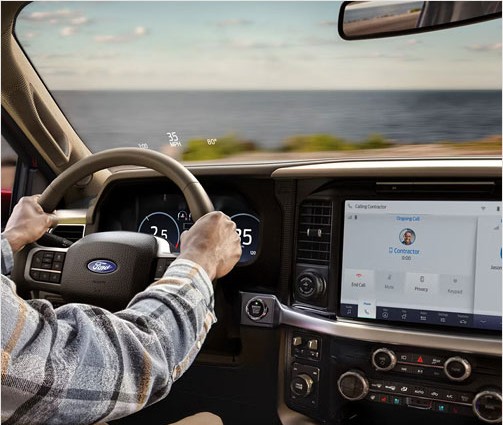
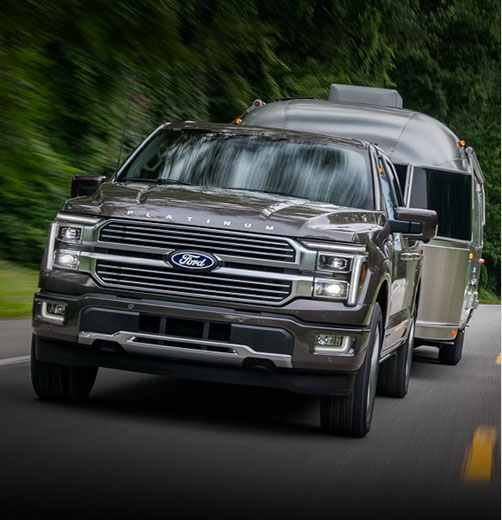
Wireless CarPlay and Android Auto are standard on the F-150 and Bronco. The Ranger runs SYNC 4A across all trims - wireless CarPlay starts at the XLT, while the base XL uses a wired connection. If wireless CarPlay is a priority on the Ranger specifically, confirm the trim level before purchase.
Ford's voice system uses "Hey Ford" conversational commands. You can say "I'm hungry" and the system routes to nearby restaurants. Voice recognition has improved meaningfully over prior generations and handles natural language well during hands-free commuting. FordPass integration adds remote start, vehicle health monitoring, and destination-send from your phone to the truck's navigation screen.
Native GPS on Ford comes through Connected Navigation, which is available as a subscription-based service. Without it, the system defaults to CarPlay or Android Auto mapping. On signal-dead OC canyon routes, that subscription becomes the difference between navigation that works and navigation that does not.
Chevrolet Google Built-In: When Google Is the Actual Operating System
This is not CarPlay. Google Maps and Google Assistant run natively - without your phone - as the system's core OS.
Every other infotainment system in this comparison adds Google or Apple as a connected layer sitting on top of a native system. Chevrolet's approach is different: Google Built-In is integrated as the operating layer itself. Google Maps, Google Assistant, and Google Play run directly from the vehicle's hardware. Your phone is genuinely optional.
This matters most on Laguna Canyon Road heading toward the 405 on a weekday morning, or on the stretch of Ortega Highway through the Cleveland National Forest. When the CR-V or Telluride owner's CarPlay session freezes because cell signal dropped, the Chevrolet driver's Google Maps continues running. It was never running off cell signal to begin with. Routes cache automatically when connected, and playback continues when the signal disappears.
Google Assistant on Chevrolet responds to natural language. "Navigate to John Wayne Airport and call Sarah" works as a single command without reformatting. That hands-free fluency on the I-405 without touching the screen is the practical outcome of Google being the native system rather than an app running on top of one.
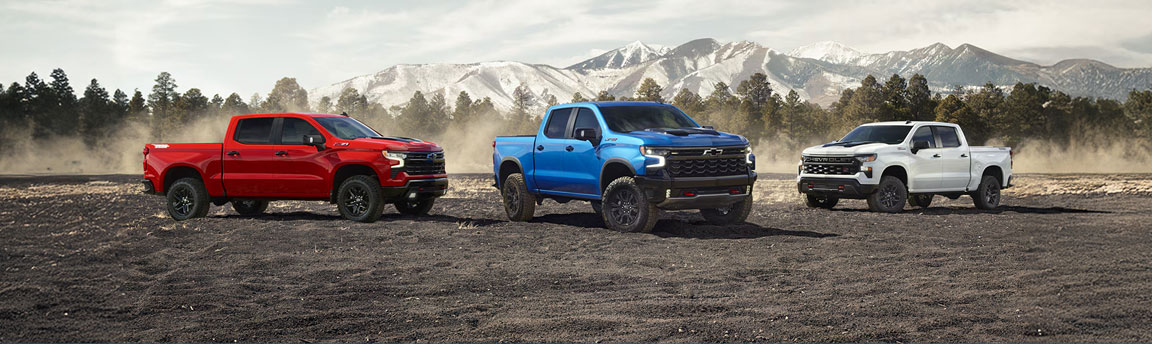
The screen lineup: 11.3-inch on the Colorado with Google Built-In standard across all trims, 13.4-inch on the Silverado 1500 from the LT trim upward with Google Built-In available, and 17.7-inch on the 2026 Traverse. On gas-powered models, wireless Apple CarPlay and Android Auto remain available for buyers who prefer their phone ecosystem. Newer Chevrolet models also retain a physical volume knob integrated through the display glass - a detail that means lowering audio on the I-405 without looking at the screen.
OTA updates are supported across the Google Built-In lineup. Navigation algorithm improvements and voice recognition refinements arrive over Wi-Fi without scheduling a service appointment.
Browse available Chevrolet Traverse configurations to see how Google Built-In integrates across the Chevy lineup.
Head-to-Head: The Five OC Criteria Side by Side
Same five criteria from the start - now mapped directly across all four systems.
No single system leads every category. The article exists to match the right system to the right driving pattern - and OC commuters have a specific pattern worth matching precisely.
Which System Fits Your Irvine Driving Life?
Four distinct buyer profiles - matched to the system that serves them best.
If your priority is simplicity and zero learning curve - Honda's Display Audio keeps the menu structure flat. You spend less time understanding the system and more time using it. Wireless CarPlay connects reliably and the interface does not require re-learning when software updates arrive. The trade-off is thinner native capability when CarPlay is unavailable.
If you want the most feature depth and the best dual-screen experience - the 2026 Hyundai Palisade with ccNC delivers the panoramic digital cockpit, wireless CarPlay standard on all trims, and OTA-updated native navigation with offline caching. Expect a brief learning curve to settle into the menu layout. The Telluride's wireless CarPlay upgrade arrives with its next-generation redesign.
If the large vertical portrait screen and FordPass integration matter to you - the F-150 with SYNC 4A provides a layout that is genuinely different from any horizontal-screen competitor. The 15.5-inch portrait display changes how you interact with navigation daily. "Hey Ford" conversational voice is well-developed for hands-free commuting.
If you drive dead-zone routes regularly or want Google Maps native without phone dependency - Chevrolet's Google Built-In is the clearest answer in this comparison. On Laguna Canyon or the Ortega Highway where CarPlay freezes, the Chevy system keeps navigating. The Colorado, Silverado, and Traverse all run Google as the core operating layer, not a connected add-on.
All five brands are available at Irvine Auto Center, 30 Auto Center Drive, Irvine, CA 92618. Drivers from Lake Forest, Mission Viejo, and Rancho Santa Margarita can compare Honda, Kia, Hyundai, Ford, and Chevrolet infotainment systems during a single afternoon visit - including voice command tests, native navigation demos, and real-world glare testing in Southern California sun.
Explore all dealership brands at the Irvine Auto Center group to find each brand's showroom location on Auto Center Drive.
Call (949) 608-1144 to arrange a technology-focused test drive session comparing multiple brands.