

Towing Capacity Guide for OC Drivers | Trucks & SUVs | Irvine Auto Center Irvine CA
Irvine Auto Center Can Pull Your Boat or Trailer?
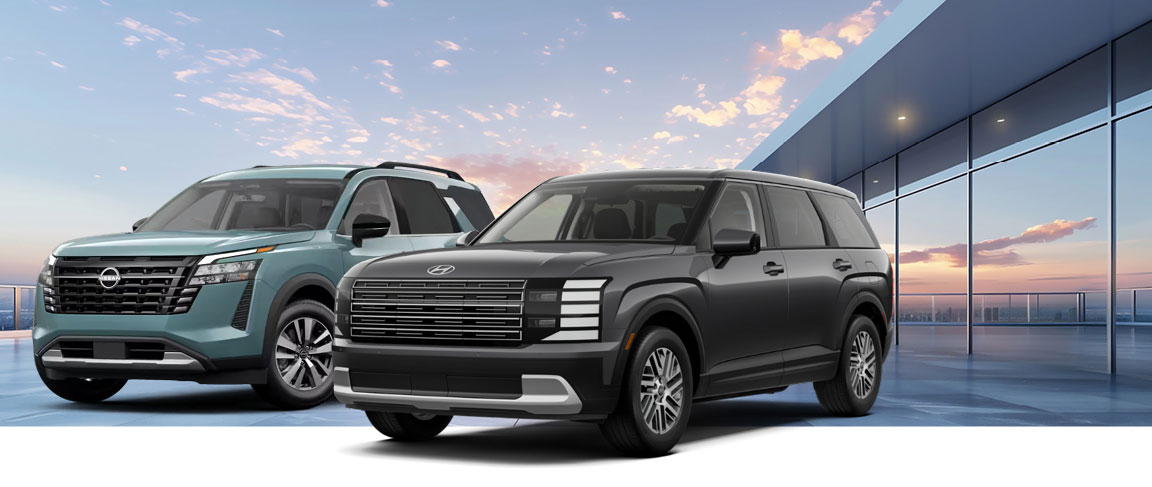
Picture this. Dana Point Harbor boat launch, 6 a.m. on a Saturday. A new Hyundai Palisade rolls up, fishing boat in tow. The SUV was sold as tow-capable - and it is, up to 5,000 lbs when properly equipped. The loaded boat and trailer together weigh 6,100 lbs.
That is not a close call. That is an overloaded vehicle on a public boat ramp.
This scenario plays out regularly across Orange County - not because buyers do not ask about towing, but because the trailer's actual loaded weight and the vehicle's real capacity rarely get compared before the purchase is made. At Irvine Auto Center in Irvine, we carry vehicles across every towing tier, from compact SUVs suited to a kayak trailer up to full-size trucks built for offshore hauls. This guide maps each tier to real OC towing scenarios so you arrive at the lot knowing exactly which vehicle fits your load.
The Four Towing Terms That Actually Matter
Most of the confusion at a boat ramp comes down to four numbers - and buyers usually only know one of them.
Understanding these four terms takes about two minutes and saves expensive mistakes:
- Towing capacity - the maximum weight the vehicle can pull behind it on a trailer. This is the headline spec on every window sticker. It is also the only number most buyers ever check.
- Payload capacity - the maximum weight the vehicle can carry inside - passengers, gear, and the tongue weight from the trailer. This is a separate limit, and it frequently becomes the binding constraint before the towing rating does.
- Tongue weight - the downward force the trailer exerts on the hitch, typically 10-15% of the total loaded trailer weight. It counts against your payload. A 6,000-lb loaded boat trailer exerts roughly 600-900 lbs of tongue weight downward on the hitch. That comes directly out of your available payload for passengers and gear.
- "Properly equipped" - every manufacturer's towing rating assumes the factory Trailer Tow Package is installed. That typically includes a Class IV receiver hitch, upgraded engine cooling, a 7-pin wiring harness, and sometimes an integrated brake controller. Without it, the rating drops - sometimes significantly.
Important:
California generally requires a separate braking system on trailers with a gross weight above 1,500 lbs. If your boat, camper, or ATV trailer exceeds that threshold, confirm that a trailer brake controller - factory-integrated or dealer-installed - is part of your setup before your first haul. Ask about this specifically when configuring your vehicle.
What Your OC Load Actually Weighs: The Reference Table
These are the real trailer scenarios Orange County buyers bring to the dealer - and the towing range each one requires.
Most towing guides use generic numbers. The table below uses actual OC destination scenarios with typical loaded weights - fuel, gear, and equipment on board, not the dry spec-sheet number.
Pro Tip:
Always calculate the loaded weight of your trailer - not the manufacturer's dry hull weight. A 19-foot fiberglass bass boat might spec at 3,200 lbs dry, but the same boat fueled, geared, and launched at Lake Elsinore commonly tips 4,800 lbs on the trailer. That gap determines which vehicle tier you actually need.
Irvine Auto Center's SUV Lineup by Towing Capacity
Eight SUVs, four towing tiers - organized by what you actually need to pull.
The table below covers SUVs and crossovers available at Irvine Auto Center. All figures reflect 2026 manufacturer-stated maximums when the vehicle is properly equipped with the Trailer Tow Package. Configuration, drivetrain, and installed packages affect your specific vehicle's actual doorjamb rating.
Notes: The 2026 Jeep Grand Cherokee reaches 6,200 lbs with both the 3.6L Pentastar V6 and the new 2.0L Hurricane Turbo 4 - the current generation does not offer a V8 engine. Honda Pilot achieves 5,000 lbs in AWD configurations; FWD models are rated at 3,500 lbs. Always confirm your specific vehicle's doorjamb rating, which reflects your actual installed configuration.
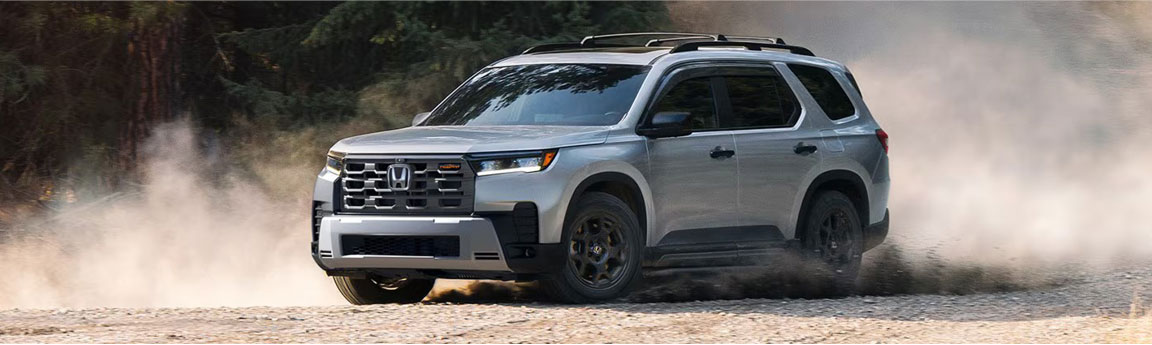
The Honda Pilot lineup spans multiple trim levels, each with different towing configurations. Explore available Honda Pilot inventory to compare AWD and FWD setups currently in stock.
When the SUV Range Is Not Enough: Mid-Size and Full-Size Trucks
For loads above 7,000 lbs, only trucks have the engineering capacity - and which engine you choose determines the range you get.
For OC buyers pulling large ski boats, travel trailers above 6,500 lbs, or heavy ATV rigs headed to Ocotillo Wells, the SUV tier ends and the truck tier begins.
Mid-size trucks: the 7,000-7,700 lb range
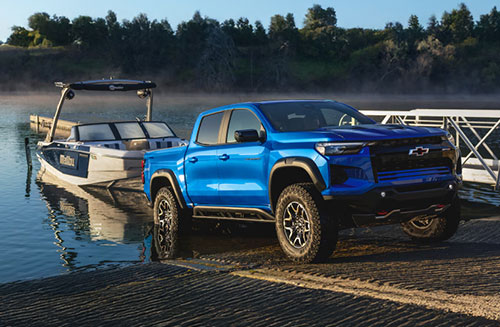
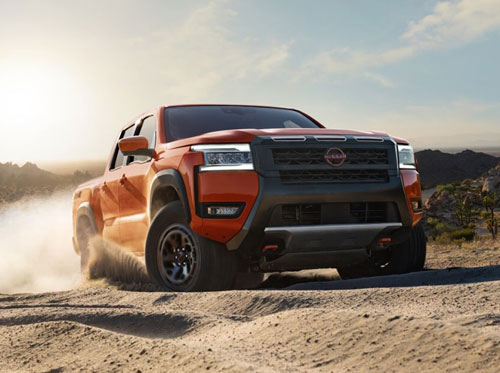
The Chevrolet Colorado, Ford Ranger, and Nissan Frontier are the mid-size truck options at Irvine Auto Center. All three cover the gap between the Grand Cherokee's 6,200-lb ceiling and the full-size truck range.
- Chevrolet Colorado: up to 7,700 lbs when properly equipped. Every 2026 Colorado uses the same 2.7L TurboMax engine with 310 horsepower and 430 lb-ft of torque. No engine decision required - the towing package and configuration determine the specific rating.
- Ford Ranger: up to 7,500 lbs when properly equipped with the Trailer Tow Package across the 2.3L EcoBoost configurations.
- Nissan Frontier: up to 7,150 lbs in King Cab 4x2 configuration; Crew Cab 4x4 settles near 6,960 lbs when properly equipped.
For a buyer cross-shopping the Hyundai Palisade and the Chevrolet Colorado side by side, these numbers clarify the decision quickly. Browse Hyundai Palisade configurations for loads under 6,000 lbs - and the Colorado when the trailer pushes beyond that ceiling.
Full-size trucks: why engine choice changes everything
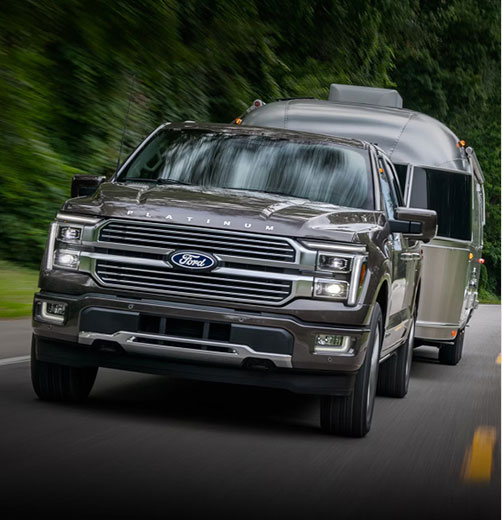
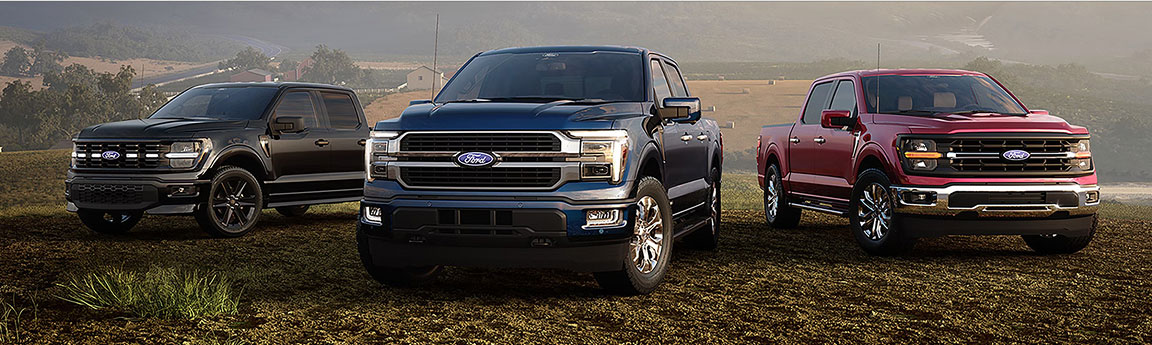
The Ford F-150, Chevrolet Silverado 1500, and Ram 1500 cover the heaviest OC towing scenarios - offshore center console boats, large fifth-wheel campers, and heavy equipment trailers. But within the same nameplate, the engine choice creates a wide spread:
- Ford F-150: 2.7L EcoBoost V6 = up to 8,400 lbs; 5.0L V8 = up to 12,900 lbs; 3.5L EcoBoost V6 (with Tow/Haul Package and Max Tow Axle) = up to 13,500 lbs
- Chevrolet Silverado 1500: 2.7L TurboMax = up to 9,500 lbs; 5.3L V8 = up to 11,300 lbs; 6.2L V8 or 3.0L Duramax diesel = up to 13,300 lbs
- Ram 1500: up to 11,320 lbs when properly equipped
The gap between the F-150's base configuration and its maximum configuration is 5,100 lbs. Two trucks with identical badges, dramatically different capability. The engine you spec at purchase is the engine that determines what you can pull for the life of the truck.
Did you know?
The 2026 Chevrolet Colorado simplifies this decision: every trim comes standard with the same 2.7L TurboMax engine producing 430 lb-ft of torque. The configuration and Trailering Package determine the rating - not a separate engine upgrade decision. For buyers who want a capable mid-size truck without navigating a complex engine menu, that single-powertrain approach removes one major variable.
Towing Technology Worth Asking About by Brand
The rating tells you what the vehicle can pull - these features determine how confident you feel doing it.
Six technologies that make a measurable difference at the Dana Point boat launch or backing down a Lake Elsinore ramp:
- Ford Pro Trailer Backup Assist (F-150 and Ranger): Turn a dash knob to steer the trailer in any direction while the truck handles the steering inputs. For solo launching without a spotter, this changes the experience entirely.
- Chevrolet Advanced Trailering App (Colorado and Silverado 1500): Sends trailer light checks, maintenance alerts, and security notifications before you leave the driveway. Hitch View delivers a close-up camera angle to the screen as you back toward the ball.
- Ram Surround View with Trailer Hitch Zoom: Dedicated camera mode for precise hitch alignment, plus Selec-Speed Control for maintaining steady descent speed on boat ramp grades.
- Nissan Pathfinder Intelligent Around View Monitor: A four-camera system producing a 360-degree composite view for close-quarters maneuvering - specifically useful in tight marina parking and crowded launch ramps.
- Trailer Sway Control: Available across virtually all 2026 towing-capable vehicles in this lineup. Automatically applies individual wheel brakes to counteract trailer sway before it escalates. Not optional behavior - it works in the background whether you initiate it or not.
- Integrated Trailer Brake Controllers: Standard or available on most properly equipped configurations. Required for California trailers over 1,500 lbs, and worth confirming at purchase rather than adding later.
If towing technology is a key factor in your decision, explore available Nissan Pathfinder configurations - the Pathfinder's 6,000-lb rating combined with its Intelligent Around View Monitor makes it one of the stronger technology-per-dollar combinations in the family SUV segment for OC boat owners.
The Setup Most Buyers Don't Think About Until Too Late
The vehicle rating is only half the equation - hitch class, ball size, and brake controller complete it.
Choosing the right vehicle is step one. Setting it up correctly for your specific trailer is the step that gets skipped most often.
Hitch class refers to the receiver rating printed on the hitch itself. Class I and II are under 3,500 lbs and unsuitable for boats or campers. Class III covers 3,500 to 8,000 lbs - most recreational trailers at the SUV tier. Class IV handles 8,001 to 10,000 lbs, required for mid-size and most full-size truck towing configurations. The factory Trailer Tow Package on most vehicles in this lineup includes a Class III or IV receiver appropriate to the vehicle's rating.
Ball size is determined by your trailer's coupler - the coupling fitting on the trailer tongue. The three common sizes are 1-7/8", 2", and 2-5/16". A mismatch between the trailer coupler and the hitch ball is one of the most preventable towing failures. Confirm your trailer's coupler size before purchasing a ball mount.
Weight distribution hitch - for trailers approaching 50% or more of the vehicle's towing capacity, a weight distribution hitch redistributes tongue weight across all four wheels of the tow vehicle and the trailer axles. The rear of the SUV stays level, steering stays predictable, and braking performance stays consistent. For any loaded travel trailer above 5,000 lbs, this accessory is worth the conversation at the dealership.
Trailer brake controller - again, California generally requires a braking system on trailers over 1,500 lbs. Most properly equipped 2026 vehicles offer an available or integrated controller. This is a specific question to ask when configuring the vehicle, not an afterthought.
If you are planning to trade your current vehicle toward a truck or SUV with more towing capability, value your current vehicle today before you visit - knowing your trade equity gives you the full picture before the conversation starts.
Which Irvine Auto Center Vehicle Fits Your OC Weekend?
Scenario-matched recommendations for the four most common OC towing situations.
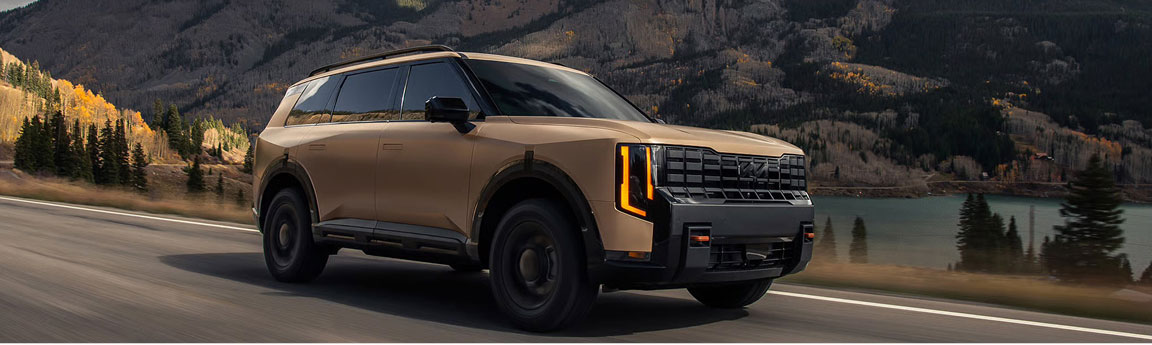
For a fishing boat at Newport Harbor or Dana Point - most aluminum and mid-size fiberglass fishing boats with trailer run 2,500-4,500 lbs fully loaded. The Hyundai Tucson (2,750 lbs) handles lighter aluminum setups. The Honda Pilot AWD (5,000 lbs) or Kia Telluride (5,500 lbs) provide clearance for larger fiberglass boats with room to spare. Confirm the loaded weight of your specific boat before deciding.
For a ski boat or wakeboard boat headed to Lake Elsinore - expect 5,000-6,500 lbs loaded. The Kia Telluride (5,500 lbs) and Jeep Grand Cherokee (6,200 lbs) represent the ceiling of the SUV range. A step up to the Chevrolet Colorado (7,700 lbs) or Nissan Frontier (7,150 lbs) adds meaningful buffer for larger boats or heavier gear loads.
For a travel trailer or camper to Big Bear Lake or the Colorado River - teardrop and popup campers in the 2,000-4,000 lb range fit the three-row SUV tier. Mid-size family travel trailers in the 5,000-7,500 lb range are mid-size truck territory. Anything above 8,000 lbs - larger fifth-wheel rigs, bigger toy haulers, or a loaded triple-axle camper - requires the F-150, Silverado 1500, or Ram 1500 with the right engine configuration.
For an offshore center console or large deep-V boat - these vessels commonly push 8,000-12,000 lbs with trailer when fully loaded for a day trip. This is exclusively full-size truck territory. The F-150 with the 3.5L EcoBoost and proper tow package reaches 13,500 lbs. The Silverado 1500 with the 6.2L V8 or Duramax diesel reaches 13,300 lbs. The Ram 1500 is rated at 11,320 lbs when properly equipped. Choosing between them comes down to engine preference, bed features, and which towing technology suite fits your launch routine.

Irvine Auto Center carries Chevrolet, Ford, Honda, Hyundai, Kia, Jeep, Nissan, Ram, and more at 30 Auto Center Drive, Irvine, CA 92618. Drivers from Lake Forest, Mission Viejo, and Rancho Santa Margarita are welcome. Bring your trailer's loaded weight, the specific boat or camper model, and any configuration questions - our team can match the right vehicle and towing package to your actual setup before you pull out of the lot.
Call (949) 608-1144 to confirm which towing-configured vehicles are in stock today.